
Panoramic photo new york city skyline manhattan downtown empire state building skyscrapers night usa


For the past 52 years, Harold Averkamp (CPA, MBA) hasworked as an accounting supervisor, manager, consultant, university instructor, and innovator in teaching accounting online. For the past 52 years, Harold Averkamp (CPA, MBA) has worked as an accounting supervisor, manager, consultant, university instructor, and innovator in teaching accounting online. Now that the steps involved have been detailed, let’s demonstrate the calculations using the Musicality example. Textbook content produced by OpenStax is licensed under a Creative Commons Attribution-NonCommercial-ShareAlike License . The OpenStax name, OpenStax logo, OpenStax book covers, OpenStax CNX name, and OpenStax CNX logo are not subject to the Creative Commons license and may not be reproduced without the prior and express written consent of Rice University.
This type of practice is likely to have been developed out of an awareness of the specific costs related to producing a batch of each product. As an activity-based costing example, consider Company ABC, which has a $50,000 per year electricity bill. For the year, there were 2,500 labor hours worked; in this example, this is the cost driver. Calculating the cost driver rate is done by dividing the $50,000 a year electric bill by the 2,500 hours, yielding a cost driver rate of $20. Batch-level activities are one of the five broad levels of activity that activity-based costing account for. Each of these levels is assessed by cost, and these costs are allocated to the company’s overhead costs.
For example, companies will sometimes offer extreme sales, such as on Black Friday, to attract customers in the hope that the customers will purchase other products. This information shows how valuable ABC can be in many situations for providing a more accurate picture than traditional allocation. Figure 6.8 illustrates how the costs in each pool are allocated to each product in a different proportion. The second step is assigning overhead costs to the identified activities. In this step, overhead costs are assigned to each of the activities to become a cost pool.
The sales price was set after management reviewed the product cost with traditional allocation along with other factors such as competition and product demand. The current sales price, cost of each product using ABC, and the resulting gross profit are shown in Figure 6.9. This costing system is used in target costing, product costing, product line profitability analysis, customer profitability analysis, and service pricing. Activity-based costing is used to get a better grasp on costs, allowing companies to form a more appropriate pricing strategy. Service industries also have cost drivers and can benefit from analyzing what drives their costs. The example highlights the importance of correct estimation of the product cost and the usefulness of activity-based costing in achieving that goal.
The predetermined overhead rate found in step four is applied to the actual level of the cost driver used by each product. As with the traditional overhead allocation method, the actual overhead costs are accumulated in an account called manufacturing overhead and then applied to each of the products in this step. The way in which companies will structure the schedule by which machines are set up is an example of how batch-level activity accounting can influence the practices of a manufacturer.
The number and types of cost pools may be completely different in the service industry as compared to the manufacturing industry. For example, the health-care industry may have different overhead costs and cost drivers for the treatment of illnesses than they have for injuries. Some of the overhead related to monitoring a patient’s health status may overlap, but most of the overhead related to diagnosis and hedging definition treatment differ from each other.
These levels include batch-level activity, unit-level activity, customer-level activity, organization-sustaining activity, and product-level activity. As technology changes the ratio between direct labor and overhead, more overhead costs are linked to drivers other than direct labor and machine hours. Making this change allows management to obtain more accurate product cost information, which leads to more informed decisions. Activity-based costing (ABC) is the process that assigns overhead to products based on the various activities that drive overhead costs. This helps managers identify non-value-adding activities and process inefficiencies, and increase profitability. Batch-level activities are work actions that are classified within an activity-based costing accounting system, often used by production companies.
The unit-level activities are most easily traceable to products while facility-level activities are least traceable. Activity-based costing (ABC) is mostly used in the manufacturing industry. It enhances the reliability of cost data, hence producing nearly true costs and better classifying the costs incurred by the company during its production process. Kohler found that a traditional form of managerial accounting was not going to suffice in properly and accurately accounting for the costs that were being incurred by the TVA in the process of carrying out their duties. Kohler introduced the concept of accounting for the costs of these processes by accurately assessing the activities involved in carrying them out.
If however the output is sold to a customer, the output is measured at the net realizable value (selling price minus selling costs). Staubus activity accounting culminates in a comparison of outputs, at standard cost or net realizable value, and inputs (Staubus, 1971). Activity-based costing (ABC) enhances the costing process in three ways. First, it expands the number of cost pools that can be used to assemble overhead costs. Instead of accumulating all costs in one company-wide pool, it pools costs by activity.
The final level of activity, organization-sustaining activity, refers to activities that must be completed regardless of the products being produced, how many batches are run, or how many units are made. Finally, ABC alters the nature of several indirect costs, making costs previously considered indirect—such as depreciation, utilities, or salaries—traceable to certain activities. Alternatively, ABC transfers overhead costs from high-volume products to low-volume products, raising the unit cost of low-volume products. In the 1930s, the Comptroller of the Tennessee Valley Authority, Eric Kohler developped the concept of Activity Accounting. The Tennessee Valley Authority was engaged in flood control, navigation, hydro-electric power generation, etc. Kohler could not use a traditional managerial accounting system for these kind of operations.
The ABC system of cost accounting is based on activities, which are any events, units of work, or tasks with a specific goal—such as setting up machines for production, designing products, distributing finished goods, or operating machines. Product-level activities are related to specific products; product-level activities must be carried out regardless of how many units of product are made and sold. (For example, designing a product is a product-level activity.) Customer-level activities relate to specific customers. An example of a customer-level activity is general technical product support.
An activity is (a portion of) a work carried out by a (part of) a company. For each activity Kohler created an activity account (Aiyathurai, Cooper and Sinha, 1991, PP 61-64). An activity account is an income or expense account containing transactions over which an activity supervisor exercises responsibility and control (Kohler, 1952, pp, 18-19).
Unit level activities are activities that are performed on each unit of product. Batch level activities are activities that are performed whenever a batch of the product is produced. Product level activities are activities that are conducted separately for each product. Facility level activities are activities that are conducted at the plant level.
There were fewer machine hours than estimated, but there was also less overhead than estimated. There were more requisitions track your charitable donations to save you money at tax time than estimated, and there was also more overhead. Now, since you have all the data needed, calculate the order cost using activity-based costing. While he has 50 skilled carpenters and 5 salespeople on his payroll, he has been taking care of the accounting by himself. Now, he intends to offer 40% of the ownership to public in next couple years and is willing to make changes and has hired you as the management accountant to organize and improve the accounting systems.
Activity-based costing benefits the costing process by expanding the number of cost pools that can be used to analyze overhead costs and by making indirect costs traceable to certain activities. The calculations Musicality did in order to switch to ABC revealed that the Solo product was generating a loss for every unit sold. Knowing this information will allow Musicality to consider whether they should make changes to generate a profit from the Solo product, such as increase the selling price or carefully analyze the costs to identify potential cost reductions. Musicality could also decide to continue selling Solo at a loss, because the other products are generating enough profit for the company to absorb the Solo product loss and still be profitable. Why would a company continue to sell a product that is generating a loss? Sometimes these products are ones for which the company is well known or that draw customers into the store.

For any bills that don’t have an option to go digital, you can use Shoeboxed to scan your bookkeeping for truck drivers paper copies and save them to the cloud. To learn more, fill out our contact form to speak with an ATBS Enrollment Specialist, or view our services and pricing. Or finding a softtware package that can do most of those tasks for you quickly and easily. On the other hand, if you took out a short-term loan to make repairs on your truck, then you would likely have to pay that off within the year. It provides an easy-to-use interface and is great for those who want to keep things simple but comprehensive. If you owed taxes in the previous year but not the current one, you must file Form 2290 to report the change and suspend your responsibilities.
For instance, an owner operator could track miles, fuel purchases, and meal expenses this way. However, this approach is very time-consuming and does not help with more complicated accounting. Trucking companies may take very different approaches to bookkeeping depending on their size, time in business, and plans to expand. At its most basic, bookkeeping can be tracked manually with ledger books or spreadsheets.


With Countingup, you can be notified when your invoices are going unpaid to ensure you always pay for the right insurance. No matter your fleet size or business needs, there is a trucking bookkeeping service to help you manage your transportation company. Get started right away by inviting employees, importing expenses from your bank account and credit card and adding clients to make generating invoices a snap. You can also use the FreshBooks app to create professional invoices and estimates from the road, snap photos of receipts and check the status of payments.
We’ll set everything up and can even train the relevant team members on the new capabilities. Your business systems will seamlessly integrate to reduce manual work and increase financial visibility. Turn your receipts into data and deductibles with our expense reports that include IRS-accepted receipt images.
These documents are also essential for creating profit and loss statements for your trucking company. By using trucking bookkeeping services, you can keep everything organized and accessible so you can find what you need when you need it. For small trucking companies, accounting software needs to offer simplicity, value for money, and scalability. Small businesses don’t always have a dedicated finance department, so the right software should make financial management as easy as possible. As a trucking business owner, you should keep records of all your expenses and the documents that support them, bookkeeping and payroll services such as receipts and account statements.
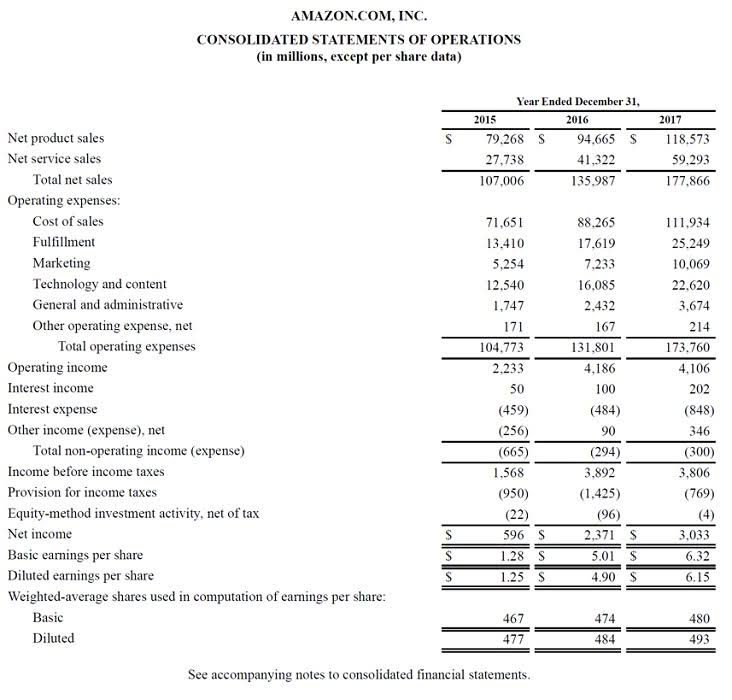
We’ll work with you to improve processes and gain efficiencies throughout your organization, all for a fixed monthly price. All you need to worry about is approval net sales while getting the benefit of stronger internal controls. Tracking your income might sound simple, but when you’ve got multiple sources of income—from different clients, contracts, or bonuses—it can get tricky.